Energy conservation and carbon reduction are important levers for promoting comprehensive green transformation of economic and social development. In recent years, around energy consumption intensity and carbon emission intensity, China has intensively issued a series of policy documents, building an increasingly complete green transformation policy system from target setting and key projects to market-based mechanisms, with policy density and intensity continuously increasing.
It is evident from policy direction that the focus of energy conservation and carbon reduction is deepening from “total volume constraints” to “intensity control + structural optimization,” emphasizing both the decline of energy consumption and emissions per unit of output and the increase in the share of non-fossil energy. For manufacturing, this means energy efficiency will become an increasingly hard core competitiveness — whether in production processes, equipment selection or park operations, “low-carbon” must be incorporated as a precondition. For all types of market entities at a critical stage of transformation, laying out energy efficiency improvement and clean energy substitution in advance is no longer optional, but a strategic imperative concerning future survival space.
The policy thread is clearly traceable. The 14th Five-Year Plan Comprehensive Work Plan for Energy Conservation and Emissions Reduction specifies that by 2025, energy consumption per unit of GDP nationwide will fall 13.5% compared with 2020, and energy consumption per unit of added value of industrial enterprises above designated size will fall 13.5%, with key energy conservation projects deployed in key industries, parks, towns and transportation. The subsequently issued 2024–2025 Energy Conservation and Carbon Reduction Action Plan further intensified efforts, proposing that energy consumption per unit of GDP and carbon dioxide emissions fall by about 2.5% and 3.9% respectively in 2024, energy consumption per unit of added value of industrial enterprises above designated size falls by about 3.5%, and the share of non-fossil energy consumption reaches about 18.9%; by 2025, the share of non-fossil energy consumption reaches about 20%, making every effort to complete the binding 14th Five-Year Plan energy conservation and carbon reduction targets.
For the smart cultivation equipment industry, green and low-carbon development is equally an important proposition. Taking the container-type smart cultivation cabin as an example, it substantially reduces irrigation water through water-fertilizer recirculation, increases output per unit of land through vertical cultivation, and reduces ineffective energy consumption through smart environmental control — essentially exchanging fewer resource consumption for more stable agricultural product supply. This “water-saving, land-saving, energy-efficient” characteristic aligns closely with the national green transformation direction, and also makes protected agriculture a vivid footnote of green, low-carbon production while safeguarding the “vegetable basket.”
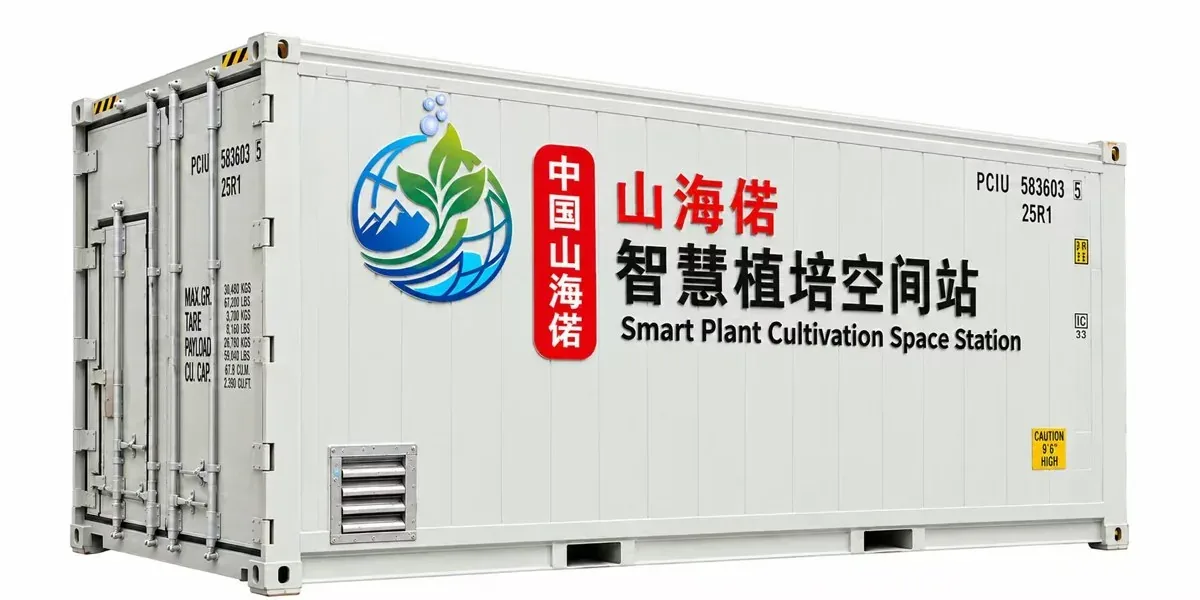
SHANHAIRUO Smart Plant Cultivation Space Station, China, integrating water-saving, land-saving and energy-efficient green production technologies
The policy focus lies in “precision drip irrigation.” In key industries, energy conservation and carbon reduction upgrading will be advanced in steel, petrochemicals, nonferrous metals, building materials and other fields, promoting the renewal and upgrading of key energy-consuming equipment; in the energy sector, the “three upgrades” of coal power energy conservation and carbon reduction, flexibility and heating supply will be advanced, alongside accelerated low-carbon coal power upgrading and construction; in transportation and urban-rural development, coordinated carbon reduction will be achieved through measures such as promoting new energy vehicles, developing green buildings, and advancing clean heating in northern regions.
From a corporate perspective, green and low-carbon development is no longer just a compliance requirement, but a window for reshaping competitiveness. Going forward, the company will continue to integrate energy efficiency management and clean energy use throughout the entire process of product R&D and delivery, implementing the concept of energy conservation and carbon reduction in the design and operation of every cabin — contributing pragmatic strength to agricultural modernization under the “dual carbon” goals while helping customers reduce operating costs.
At the same time, the role of mechanisms is further amplified. Policies propose improving price policies such as tiered electricity pricing and two-part heat pricing, deepening energy price formation mechanisms to guide demand-side energy conservation; the coordination of market-based mechanisms such as energy use rights trading, carbon emission rights trading and green certificate trading is continuously strengthened, allowing resource and environmental factor prices to fully reflect their scarcity through market-based allocation. For enterprises, green transformation has changed from an “optional question” to a “mandatory question”: whoever takes the lead in energy efficiency management, clean energy use and carbon asset management will win the initiative in future competition. It can be anticipated that as the policy toolbox continues to enrich, green and low-carbon development will be more deeply embedded in the entire industrial operation process, driving the whole society to form a modest, green and low-carbon production and lifestyle.
For enterprises, seizing the window of green transformation lies in translating policy language into actionable technology and business actions: on one hand, actively participate in energy efficiency benchmarking and carbon asset management to understand one’s own energy consumption and emissions baseline; on the other hand, embed energy conservation and carbon reduction into every link of product design, manufacturing and operational services. Only by truly building green into products and processes can enterprises respond calmly under increasingly strict binding targets and translate policy dividends into tangible development advantages.